Features
Left and Right Stereo Sound from One Speaker
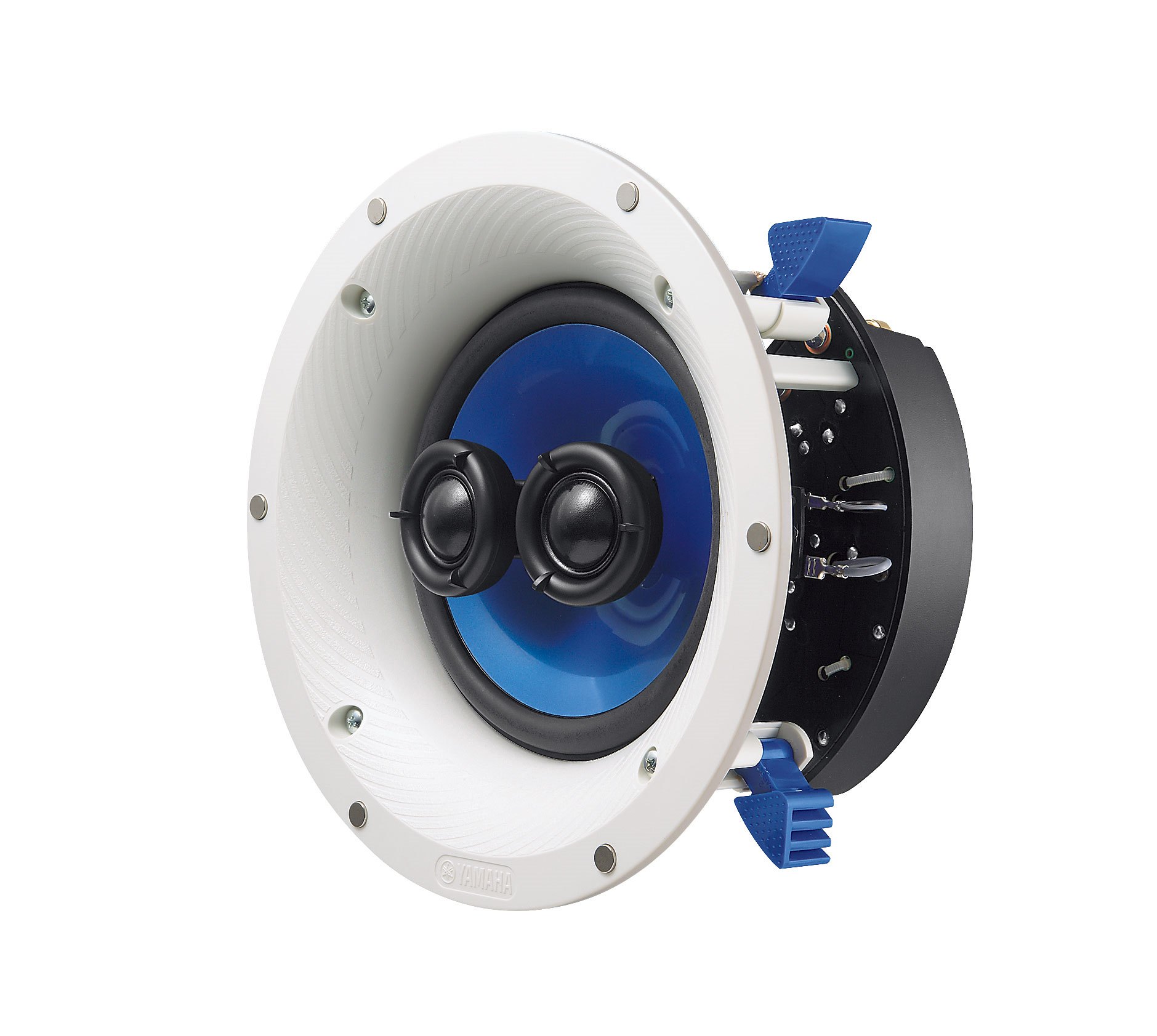
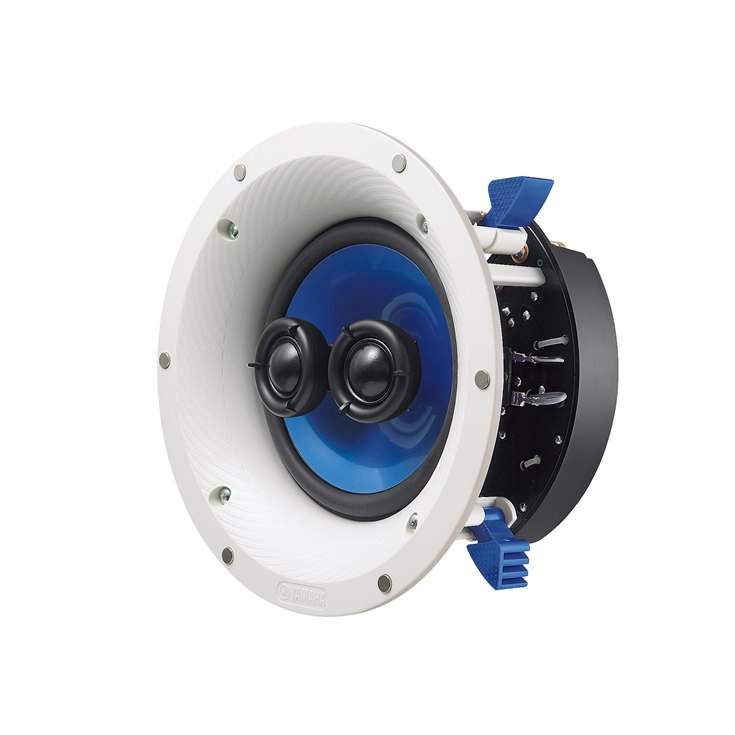
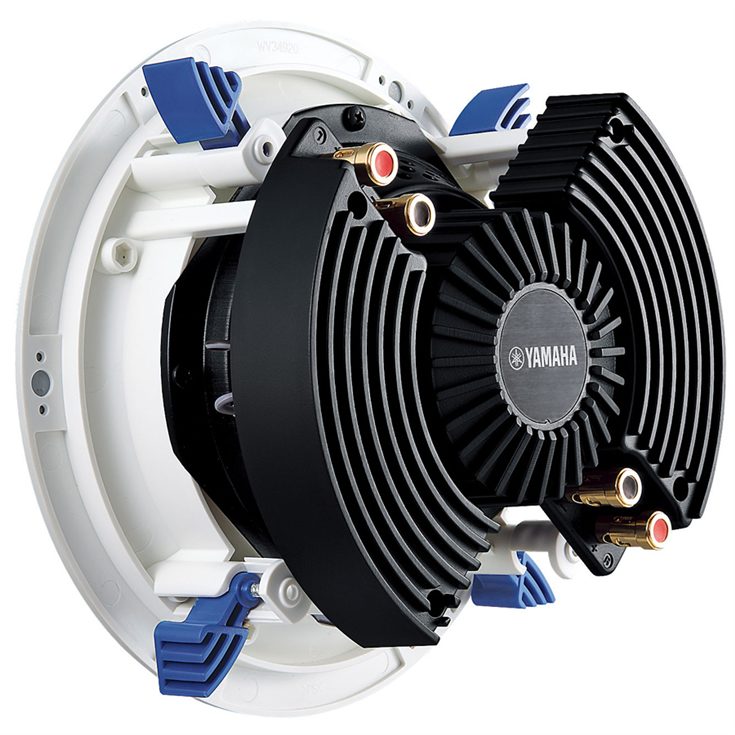
The design of the NS-ICS600 includes dual tweeters, a dual voice coil woofer and two pairs of speaker terminals on the back of one speaker, enabling stereo sound from just one speaker. To install the NS-ICS600, run two pairs of speaker wire (left and rig...
Features
Left and Right Stereo Sound from One Speaker
The design of the NS-ICS600 includes dual tweeters, a dual voice coil woofer and two pairs of speaker terminals on the back of one speaker, enabling stereo sound from just one speaker. To install the NS-ICS600, run two pairs of speaker wire (left and right) from your amplifier to this single stereo speaker. This allows you to mount only one speaker in a laundry room, bathroom, kitchen, hallway or other narrow space where it is difficult to locate two speakers.

High Sound Quality
- Moisture resistant 6-1/2" blue PP (polypropylene) mica cone woofer for high performance mid-low sound reproduction
- 1" fluid-cooled soft-dome swivel tweeter delivers pure high frequency with precise sound positioning
- Dual voice coil woofer and dual swivel tweeter for stereo input
Quick and Easy Installation
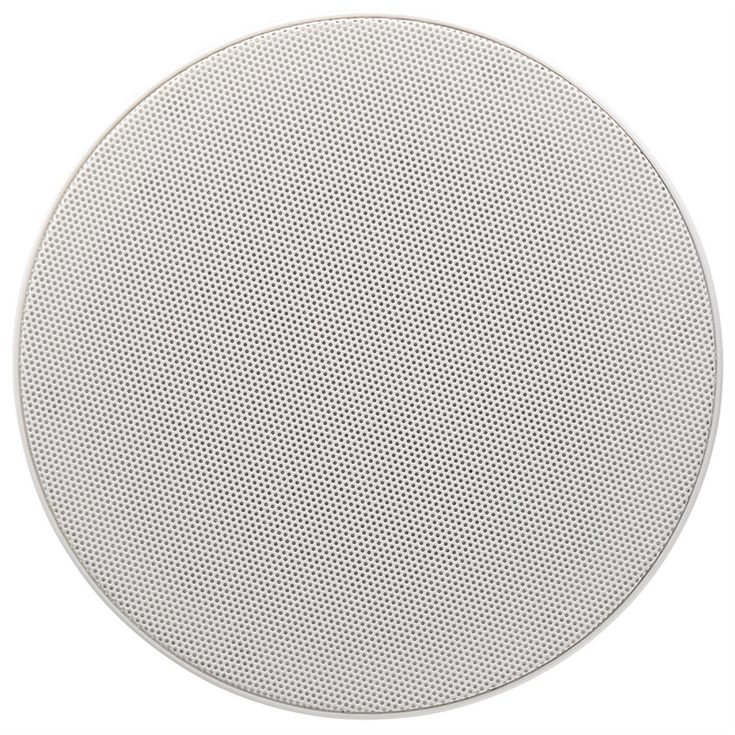
- Paintable grille with magnets for quick and easy installation
- Large mounting clamp with non-slip tread for sure grip

Unique Design
- Outputs stereo sound from a single speaker, making it ideal for use in: — L shaped rooms
- Grain-finished acoustic baffle with spiral pattern for natural sound dispersion
- Slim profile design for flush in-ceiling or in-wall mounting
- Sealed back cover to protect speaker and crossover from dust and moisture
— Bathrooms
— Kitchens
— Hallways
— Any other space where it is difficult to install two separate speakers
Technology
Audio & Video
Quality such as never experienced before—at a reasonable price.
That was the key idea behind the development of Yamaha's new series of in-ceiling speakers.
Powerful sound completely unexpected from such small dimensions, elegant and sophisticated design,
blending perfectly with the room interior...
The synergy between seasoned professional sound designers and a young technician from overseas,
bridging differences in nationality and age, has resulted in a new and outstanding product.
That was the key idea behind the development of Yamaha's new series of in-ceiling speakers.
Powerful sound completely unexpected from such small dimensions, elegant and sophisticated design,
blending perfectly with the room interior...
The synergy between seasoned professional sound designers and a young technician from overseas,
bridging differences in nationality and age, has resulted in a new and outstanding product.
|
||||||
|
||||||
|
— The sizeable workshop is illuminated by a soft light. Large wooden boards lined up against the wall serve as baffles for many different types of speakers. They all look quite similar. But when reproducing music, the actual sound is very different. This fact was the first thing that intrigued Wang Yu-Lei, a technical trainee from China.
Wang:"I've always liked to listen to music, but since becoming involved in the development of speakers at Yamaha, I am gradually learning to distinguish subtle nuances in sound. For example, I will notice special characteristics in the bass or treble region, or the extent of the dynamic range. Even when listening to songs by my favourite artists, I now focus on different aspects. It feels a bit like walking along a mountain trail and progressively encountering new vistas."
— We are at Yamaha's main plant in Hamamatsu. A dedicated listening room for the development of in-ceiling speakers has been set up here. The wall boards feature an assortment of prototypes and speakers of other manufacturers. The current project started out with intensive listening sessions of these speakers. In addition to the Rock and Jazz CDs commonly used for such tests, a variety of Chinese music favoured by Mr Wang is frequently heard during listening sessions these days.
Mr Wang hails from the coastal province of Jiangsu in China. After studying mechanical engineering in university, he joined the local branch of Yamaha in 2008, partly spurred by an interest in music. He immediately applied for technical training in Japan and was accepted on his first try, winning out over severe competition for this newly instituted program. Although he is therefore part of a promising new elite, he does not come across as pushy or self-centred. Rather, he seems serious and a bit shy, with a boyish smile on his face, as he relates "In fact, until I entered university, I didn't even know that Yamaha makes something else besides motorcycles."
"From the first time I met him, I thought that he seemed dedicated, a hard worker," says development team leader Kotaro Mizuno, who is Mr Wang's direct superior. He has become a bit of a father figure to Wang, guiding the new arrival who initially could hardly speak any Japanese, with the right mix of leniency and firmness. The seasoned professional and the novice from overseas who had come to learn the skills of the trade. The new product series that represents a fresh endeavour for Yamaha was born out of the meeting of dedicated minds, transcending differences in nationality and age.
— The main target is DIY inclined general home users. To enable potential customers to conveniently check out the speakers at major electronics stores, the design and cost/performance ratio were given high priority during development. With regard to high-fidelity audio products, Yamaha of course has a long and illustrious history, but in this particular field the company is a more of a challenger. Starting essentially from zero, the development team around Mr Mizuno has created a new product series. Including the research and investigative phase, about four years of effort and a considerable investment were needed to arrive at this point.
"Although the basic construction principle of a speaker is relatively simple, working out the design policy and achieving the intended sound while keeping within the given budget limits took considerable time and effort." recalls Tsunenori Sano, in charge of technical supervision, whose 20-year career in sound design includes working on high-end speakers. While involved in the current project, Mr Sano collected information about the type of sound popular on the North American market by visiting dealers all over the continent during a period of about two years.
Sano:"This enabled me to talk to people who are at the forefront of marketing, and who also introduced me to their customers, allowing me to see how installable speakers are actually used in America. I think it is really important to get out of the lab and into the real world, to obtain first-hand experience. Things I learned through that process are reflected in the design of the current models."
— To complement these external efforts, the above mentioned listening room was established within Yamaha. After thoroughly studying samples from competing manufacturers, a powerful "Yamaha style" sound providing excellent value for money was arrived at.
— Sound quality and cost were not the only concerns during development. "Design that is unobtrusive but truly elegant" was also a major target. The most prominent aspect here is the low-profile fringe grill that is much slimmer than on comparative speakers from other brands. Without calling attention to itself, the Yamaha design will blend perfectly with the wall or ceiling, thereby enhancing the interior decor of the room. The fine curlicue pattern on the outer circumference of the speakers also serves to minimize unwanted sound reflections.
Sano:"The front grille is fastened with a magnetic catch that allows it to be easily attached and removed. The neodymium material used here is the most powerful permanent magnet available. I don't think this can be found in other speakers of the same price class."
— And there is yet another aspect. A highly attractive feature of the new NS-IC series is their well-built rear design. Most in-ceiling speakers simply have plain, exposed terminals and wires on the rear side, which is normally not visible. By contrast, the Yamaha speakers feature a plastic cover guarding the driver network. Furthermore, their large dog-ear shaped clamps have a mechanical beauty that somehow evokes the general shape of an elegant Yamaha motorbike.
Mizuno:"To enter a market dominated by many well established manufacturers, we needed a special Yamaha 'something' to make our mark. The 'Looks Great Even From Behind' design in this respect was an important development concept."
— Of course, reliability was also given high priority. As a case in point, the strength of the magnetic grille catch was tested by suspending weights from it while playing music, with the speaker mounted in the ceiling. Stringent internal Yamaha quality requirements established specially for the new NS-IC series had to be cleared. These also extended to the clamps that are used to hold the speaker in place. In tests under sound vibration conditions, the clamps had to support several times the actual speaker weight, to ensure that there can be no risk of accidents.
— Mr Wang was tasked with the structural design for the new series. This involves exactly specifying the shape and dimensions of each part in order to create a coherent mechanism. Restrictions regarding the overall size and manufacturing costs of course have to be carefully observed. Initially, Mr Wang learned by watching and following the example of his senior team members when drawing up blueprints.
"Industrial standards differ between China and Japan, and in the beginning I had trouble even asking questions, due to my limited language ability. I made a lot of blunders during that time..." (Wang) But repeatedly going through the process of drawing up a blueprint, only to have it rejected by the boss, "I gradually came to understand what's important for the design" says Mr Wang.
Wang:"For a designer, the blueprint is like an important missive. In a mechanism, even the smallest part must fulfil a specific purpose. There must be clear reasons for its shape and dimensions. A good design blueprint makes these things immediately obvious. By helping to design a new speaker, I feel that I have learned to communicate my own intentions much better than before."
— In fact, after assisting with the mechanism design for the NS-IC800 and NS-IC600 under the guidance of engineers Mizuno and Sano, Mr Wang then went on to produce the blueprint for the NS-IC400 on his own. This is the 4-inch "spotlight size", a first for Yamaha. Mounting depth is a mere 80 millimetres. Within such a small space, resistors, capacitors, coils and other required parts had to be arranged properly. The process of controlling the spacing of parts down to the tenths of a millimetre "no doubt was a new experience and a major challenge for him," reminisces his mentor Sano.
Sano:"The network placement was a major obstacle. Because the NS-IC400 is a full-range speaker that covers the entire frequency range with a single unit, a cap directly attached to the voice coil in the centre of the woofer acts as a tweeter. Therefore we originally did not plan to include a network for the woofer/tweeter combination. But at a certain stage, it was suggested that for better sound quality, having a network would be desirable. Consequently, the rear cover shape including the terminals was repeatedly redesigned, first on paper and then in prototypes that were examined in-house. Wang went through this process any number of times."
Wang:At first, the idea was to have the network parts in two separate locations. But the increased space requirements as well as the higher cost that would be involved in such an approach "inevitably resulted in an outright rejection by Mr Mizuno" says Mr Wang. "I originally thought it couldn't be done, but while receiving various suggestions and continuing to study the matter, I suddenly hit upon a solution. The greatest danger for an engineer is thinking that something is impossible. For me, that realization was an eye-opener."
Mizuno:"He is a cheerful type, yet has a stubborn streak" recalls team leader Mizuno with a smile. "But most importantly, he has the flexibility to follow up on suggestions and to re-examine his approach. Compared to the first design that he showed me, the actual NS-IC400 has become considerably more compact. Within a difficult environment and while struggling to overcome the language barrier, he has shown an impressive capability to learn quickly."
— Working hard to communicate in broken Japanese with the people around him, and at the same time absorbing new knowledge and technology, Mr Wang's efforts had an energizing effect on the entire project.
Mizuno:"In the process of bringing a product to market, the designers alone can only do so much. Engineers, designers, manufacturing specialists, quality assurance, all the various departments must work together to clear the economic hurdles and make it happen. The enthusiasm and dedication of the people involved will be reflected in the final product. I even think that it results in a kind of beauty that distinguishes it from other brands. Personally, I am very pleased with how these particular products turned out."
Wang:Under the guidance of engineer Sano, Mr Wang recently has started to explore sound design. "I am still at the stage where I have finally become conscious of the type of sound that I like. But to be called a speaker professional, one must be able to deliver the sound that customers are after, while using one's own sound as a yardstick. In regions such as America, Japan, and China, there are different attitudes towards sound and different preferences. I still have a lot to learn."
— For these four speaker models, Mr Sano in the role of mentor wanted "power both in the low and high end, and sound that does not cause listener fatigue". The goal was speakers that are able to fill a large room with dynamic sound, yet retain the transparency in the midrange needed for good reproduction of vocals. Striking the right balance within a reasonable price range, providing the user with the satisfaction of ownership, that is what the designers were after. The struggle to achieve these aims no doubt became a worthwhile experience also for Mr Wang as he was observing the sound design process at first hand.
Sano:"An essential requirement for a speaker designer is the ability to discern finely nuanced differences in sound. In addition to training and experience, an innate aptitude for this is very important. In this regard, Wang has what it takes. Being strongly motivated, I am sure that with increasing experience, he will show further progress. In the long run, his attitude and sensibility should enable him to create a sound that has appeal on an international basis. But we also hope that our basic stance of staying as true to the original signal as possible also will become part of his heritage. In the lower price brackets this goal is often difficult to realize, but the question of whether the underlying commitment to fidelity is there has a decisive effect on the outcome."
— Through unwavering dedication and craftsmanship, Yamaha's new in-ceiling speakers strike an intriguing balance between sound quality, design, and cost/performance ratio. They will be released first in North America, later to be followed by Europe and China. After experiencing the craftsmanship of Yamaha at the source, Mr Wang is also scheduled to return to China in one year.
Wang:"The fact that I was able to create a satisfying product with my own hands is the biggest joy for me. After returning to my country, I want to make use of my training and experiences here to develop products that bring joy not only to users in China but around the world. The people I met at Yamaha in Japan all make untiring efforts, aiming to improve sound quality ever so much, through small but important steps. By continuing to work in design I would like to correctly communicate this spirit to others."
![]() |
— We are at Yamaha's main plant in Hamamatsu. A dedicated listening room for the development of in-ceiling speakers has been set up here. The wall boards feature an assortment of prototypes and speakers of other manufacturers. The current project started out with intensive listening sessions of these speakers. In addition to the Rock and Jazz CDs commonly used for such tests, a variety of Chinese music favoured by Mr Wang is frequently heard during listening sessions these days.
Mr Wang hails from the coastal province of Jiangsu in China. After studying mechanical engineering in university, he joined the local branch of Yamaha in 2008, partly spurred by an interest in music. He immediately applied for technical training in Japan and was accepted on his first try, winning out over severe competition for this newly instituted program. Although he is therefore part of a promising new elite, he does not come across as pushy or self-centred. Rather, he seems serious and a bit shy, with a boyish smile on his face, as he relates "In fact, until I entered university, I didn't even know that Yamaha makes something else besides motorcycles."
![]() |
![]() |
"Although the basic construction principle of a speaker is relatively simple, working out the design policy and achieving the intended sound while keeping within the given budget limits took considerable time and effort." recalls Tsunenori Sano, in charge of technical supervision, whose 20-year career in sound design includes working on high-end speakers. While involved in the current project, Mr Sano collected information about the type of sound popular on the North American market by visiting dealers all over the continent during a period of about two years.
![]() |
— To complement these external efforts, the above mentioned listening room was established within Yamaha. After thoroughly studying samples from competing manufacturers, a powerful "Yamaha style" sound providing excellent value for money was arrived at.
![]() |
Sano:"The front grille is fastened with a magnetic catch that allows it to be easily attached and removed. The neodymium material used here is the most powerful permanent magnet available. I don't think this can be found in other speakers of the same price class."
![]() |
Mizuno:"To enter a market dominated by many well established manufacturers, we needed a special Yamaha 'something' to make our mark. The 'Looks Great Even From Behind' design in this respect was an important development concept."
— Of course, reliability was also given high priority. As a case in point, the strength of the magnetic grille catch was tested by suspending weights from it while playing music, with the speaker mounted in the ceiling. Stringent internal Yamaha quality requirements established specially for the new NS-IC series had to be cleared. These also extended to the clamps that are used to hold the speaker in place. In tests under sound vibration conditions, the clamps had to support several times the actual speaker weight, to ensure that there can be no risk of accidents.
"Industrial standards differ between China and Japan, and in the beginning I had trouble even asking questions, due to my limited language ability. I made a lot of blunders during that time..." (Wang) But repeatedly going through the process of drawing up a blueprint, only to have it rejected by the boss, "I gradually came to understand what's important for the design" says Mr Wang.
![]() |
— In fact, after assisting with the mechanism design for the NS-IC800 and NS-IC600 under the guidance of engineers Mizuno and Sano, Mr Wang then went on to produce the blueprint for the NS-IC400 on his own. This is the 4-inch "spotlight size", a first for Yamaha. Mounting depth is a mere 80 millimetres. Within such a small space, resistors, capacitors, coils and other required parts had to be arranged properly. The process of controlling the spacing of parts down to the tenths of a millimetre "no doubt was a new experience and a major challenge for him," reminisces his mentor Sano.
Sano:"The network placement was a major obstacle. Because the NS-IC400 is a full-range speaker that covers the entire frequency range with a single unit, a cap directly attached to the voice coil in the centre of the woofer acts as a tweeter. Therefore we originally did not plan to include a network for the woofer/tweeter combination. But at a certain stage, it was suggested that for better sound quality, having a network would be desirable. Consequently, the rear cover shape including the terminals was repeatedly redesigned, first on paper and then in prototypes that were examined in-house. Wang went through this process any number of times."
![]() |
Mizuno:"He is a cheerful type, yet has a stubborn streak" recalls team leader Mizuno with a smile. "But most importantly, he has the flexibility to follow up on suggestions and to re-examine his approach. Compared to the first design that he showed me, the actual NS-IC400 has become considerably more compact. Within a difficult environment and while struggling to overcome the language barrier, he has shown an impressive capability to learn quickly."
— Working hard to communicate in broken Japanese with the people around him, and at the same time absorbing new knowledge and technology, Mr Wang's efforts had an energizing effect on the entire project.
Mizuno:"In the process of bringing a product to market, the designers alone can only do so much. Engineers, designers, manufacturing specialists, quality assurance, all the various departments must work together to clear the economic hurdles and make it happen. The enthusiasm and dedication of the people involved will be reflected in the final product. I even think that it results in a kind of beauty that distinguishes it from other brands. Personally, I am very pleased with how these particular products turned out."
![]() |
Sano:"An essential requirement for a speaker designer is the ability to discern finely nuanced differences in sound. In addition to training and experience, an innate aptitude for this is very important. In this regard, Wang has what it takes. Being strongly motivated, I am sure that with increasing experience, he will show further progress. In the long run, his attitude and sensibility should enable him to create a sound that has appeal on an international basis. But we also hope that our basic stance of staying as true to the original signal as possible also will become part of his heritage. In the lower price brackets this goal is often difficult to realize, but the question of whether the underlying commitment to fidelity is there has a decisive effect on the outcome."
— Through unwavering dedication and craftsmanship, Yamaha's new in-ceiling speakers strike an intriguing balance between sound quality, design, and cost/performance ratio. They will be released first in North America, later to be followed by Europe and China. After experiencing the craftsmanship of Yamaha at the source, Mr Wang is also scheduled to return to China in one year.
Wang:"The fact that I was able to create a satisfying product with my own hands is the biggest joy for me. After returning to my country, I want to make use of my training and experiences here to develop products that bring joy not only to users in China but around the world. The people I met at Yamaha in Japan all make untiring efforts, aiming to improve sound quality ever so much, through small but important steps. By continuing to work in design I would like to correctly communicate this spirit to others."
| |
Specs
Specifications
| Recommended Usage | In-ceiling single stereo speaker for kitchens, bathrooms, hallways, etc. | |
|---|---|---|
| Type | Two-way coaxial | |
| Woofers | 6-1/2" PP (polypropylene) mica cone | |
| Tweeters | Dual 1” fluid-cooled soft dome | |
| Swivel Tweeter and Midrange Driver | Tweeters | |
| Paintable Grill with Protective Cover Included | Yes | |
| Frequency Response | 65 Hz - 28 kHz | |
| Sensitivity | 89 dB (2.83 V, 1 m) | |
| Input Power (Maximum / Nominal) | 60 W x 2 / 20 W x 2 | |
| Impedance | 8 ohms | |
| Product Dimensions (W x H x D) | 9-1/2" x 4-5/8" | |
| Mounting Depth | 4-1/4” | |
| Product Weight (lbs. each) | 4 lbs. | |